
How to choose the perfect sunglasses for summer 2026: 4 tips
Shape, colour, lenses, material: what’s worth knowing before you buy
Choosing the right sunglasses isn’t just a matter of taste. Face shape, undertone, fit and proportions are concrete criteria that make the difference between a purchase that works and one that ends up in a drawer.
Here are four practical tips to guide you in your choice.
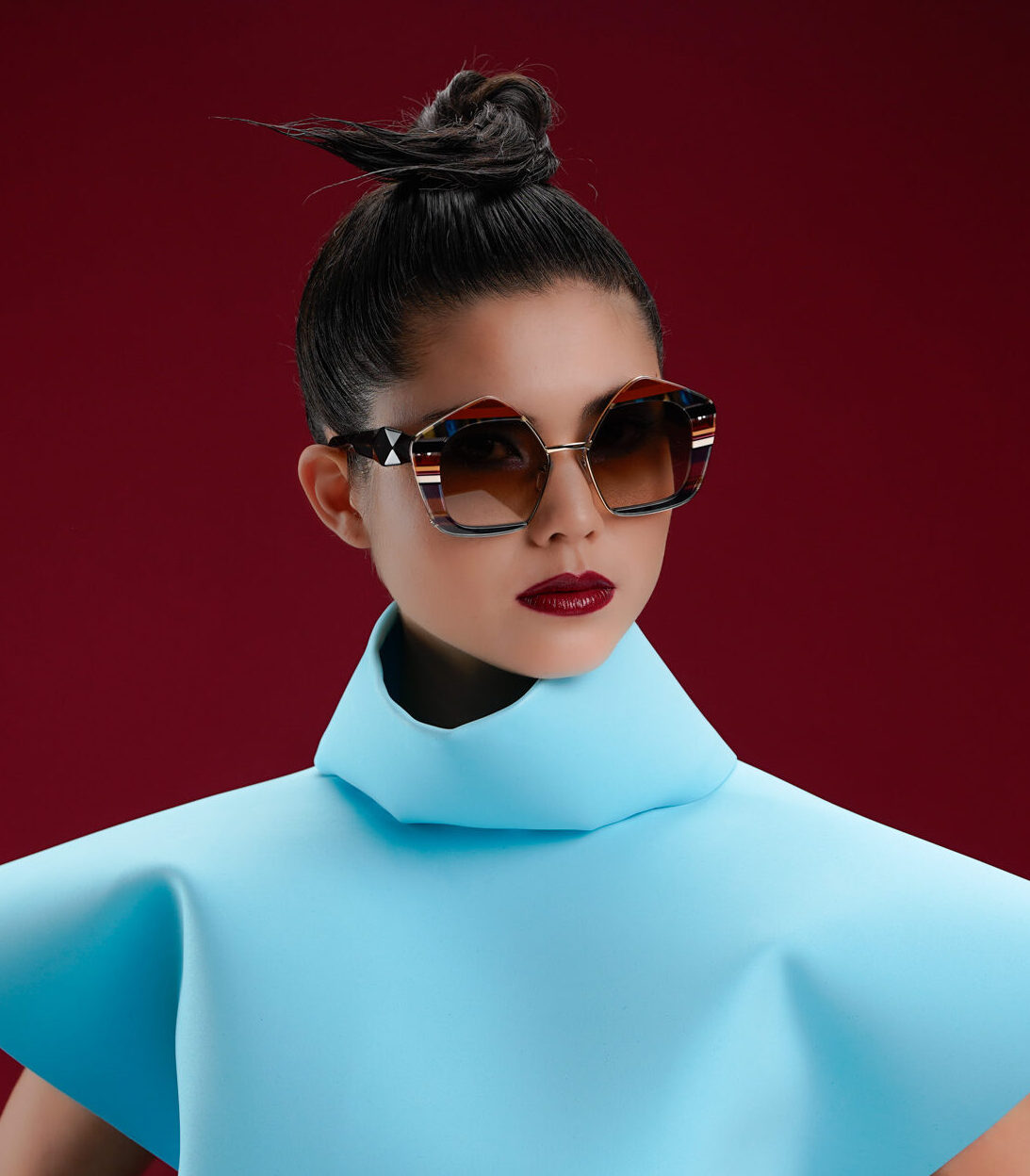


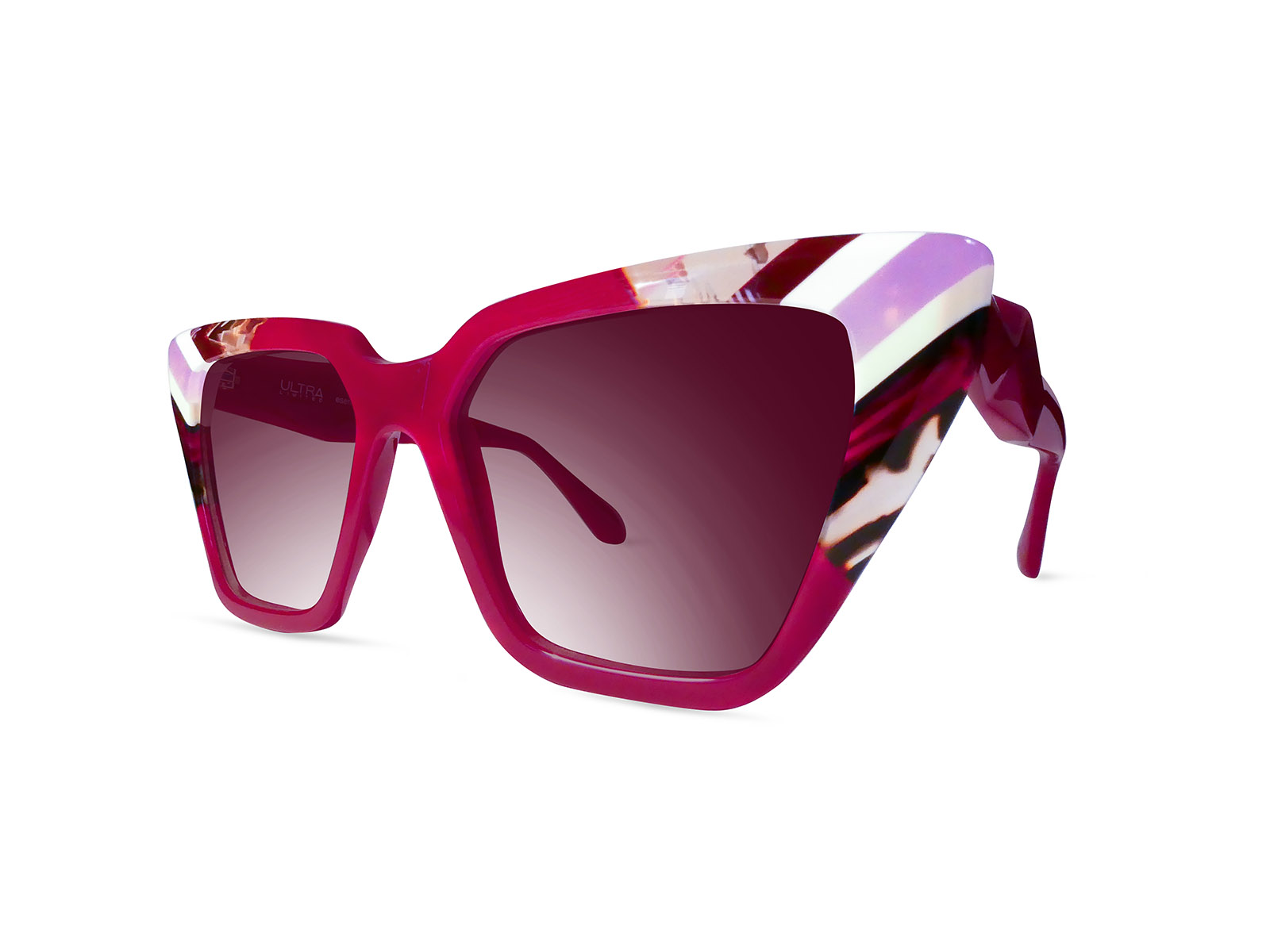
How to work out which shape suits your face
Frame shape: start from the geometry of your face
The basic principle is contrast: a frame with sharp angles gives structure to a round or soft face, while a rounded shape softens strong features or a pronounced jaw. A regular, well-proportioned silhouette works on almost anything.
In practice:
- Round or softly oval face, look for square or geometric shapes with marked horizontal lines. They add structure without weighing things down.
- Square face or pronounced jaw, go for round, panthos or cat eye shapes. The curves soften the angles without erasing them.
- Oval face, almost anything works: use that freedom to be bold with shape or colour instead of playing it safe.
- Heart-shaped face, choose frames that are light at the top and carry more visual weight towards the bottom. Butterfly or slightly flared shapes are the most balanced.
Why your skin’s undertone is the real starting point
Colour: match it to your undertone
The most common mistake is choosing the colour of your glasses based on what you’re wearing. The right reference point is your skin, or rather its undertone. It doesn’t change with the seasons, it doesn’t depend on your tan, and it’s what determines whether a shade lights you up or dulls you down.
- Warm undertone, skin with golden, peachy or amber nuances: go for havana, tortoiseshell, rust, warm brown and burnt orange shades. All the tones that recall earth and wood.
- Cool undertone, skin with rosy or neutral-beige nuances: the perfect shades are black, grey, burgundy, deep blue and clear. Clean colours with good contrast against the face.
- Neutral undertone, you can move between both registers. If you don’t know where to start, hybrid colours, like certain acetates that shift with the light, are the most versatile choice.
A good pair of glasses is recognised by how it sits on your face, not just how it looks
Fit: before choosing, actually wear them
Before you look in the mirror, keep the glasses on your face for a few minutes. Move your head, talk, bend down. If you feel no pressure at your temples, the bridge leaves no marks and the frame doesn’t slip, that’s the right fit.
With cellulose acetate this balance is easier to find: the material distributes the weight naturally and the temples keep their flexibility over time. With use, the acetate gradually adapts to the shape of your face and the fit improves.
Oversize, yes, but with awareness
Proportions: find the right balance between face and frame
Large frames are among the most sought-after and among the easiest to get wrong. An oversize frame on a small face or with delicate features can look out of proportion. Conversely, glasses that are too small on a wide face disappear and balance nothing.
A useful rule of thumb: the frame shouldn’t be wider than your temples, nor drop below your cheekbones. These two limits define the proportionate range for your face.
- For small faces or delicate features, choose models that look large but feel visually light: clear or semi-transparent lenses, slim frames, essential shapes.
- For large faces or strong features, you can carry significant volumes. This is where oversize really works, both in shape and in colour.
Four tips, a more informed choice
We wrote this guide to help you choose your next pair of sunglasses. If you’re looking for models that meet all four criteria, visit the website and discover the Ultra Limited sunglasses collection, and choose the perfect pair for your summer.
Discover the collection
