
Ultra Limited laminates
When colour becomes architecture
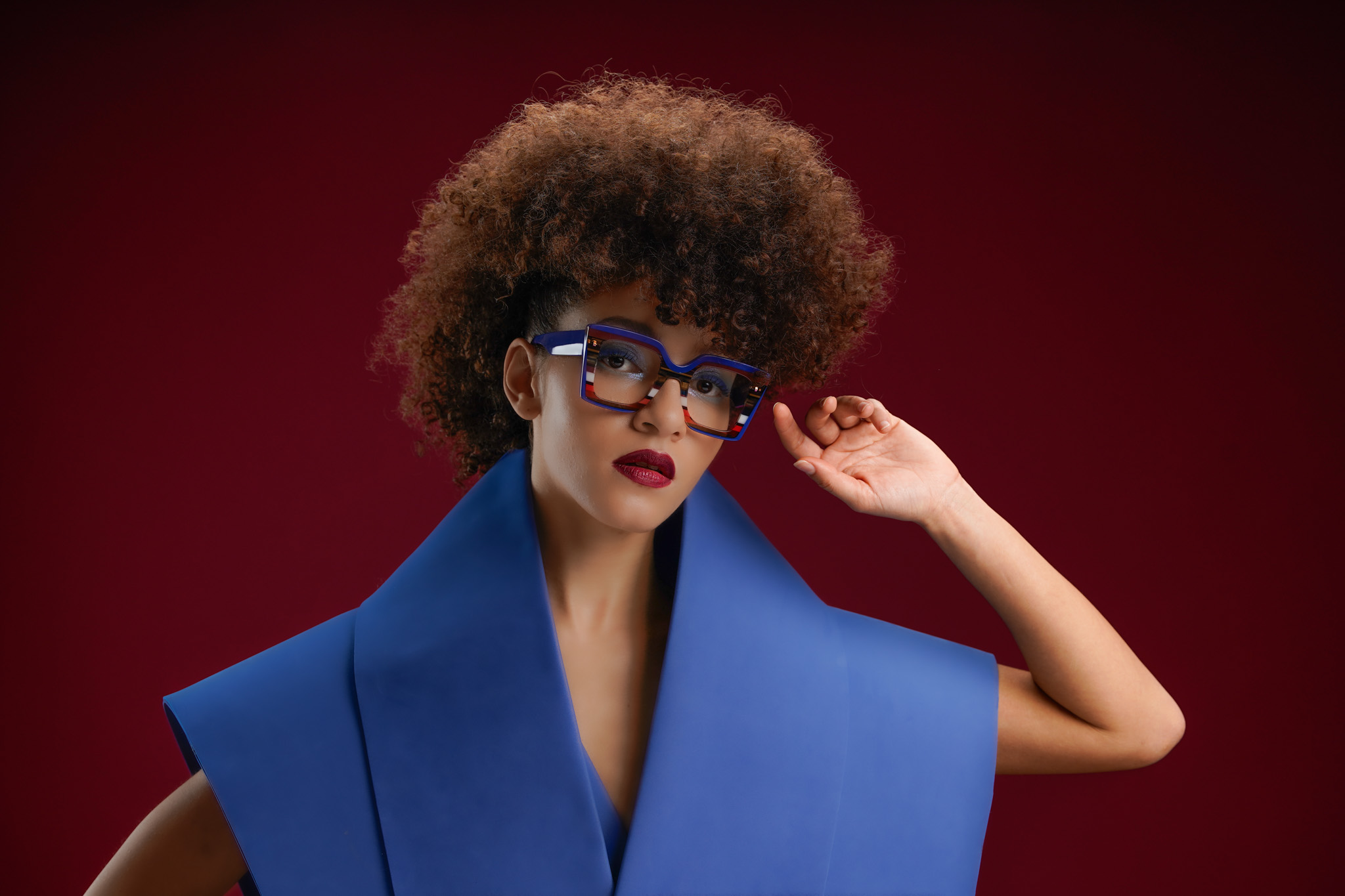
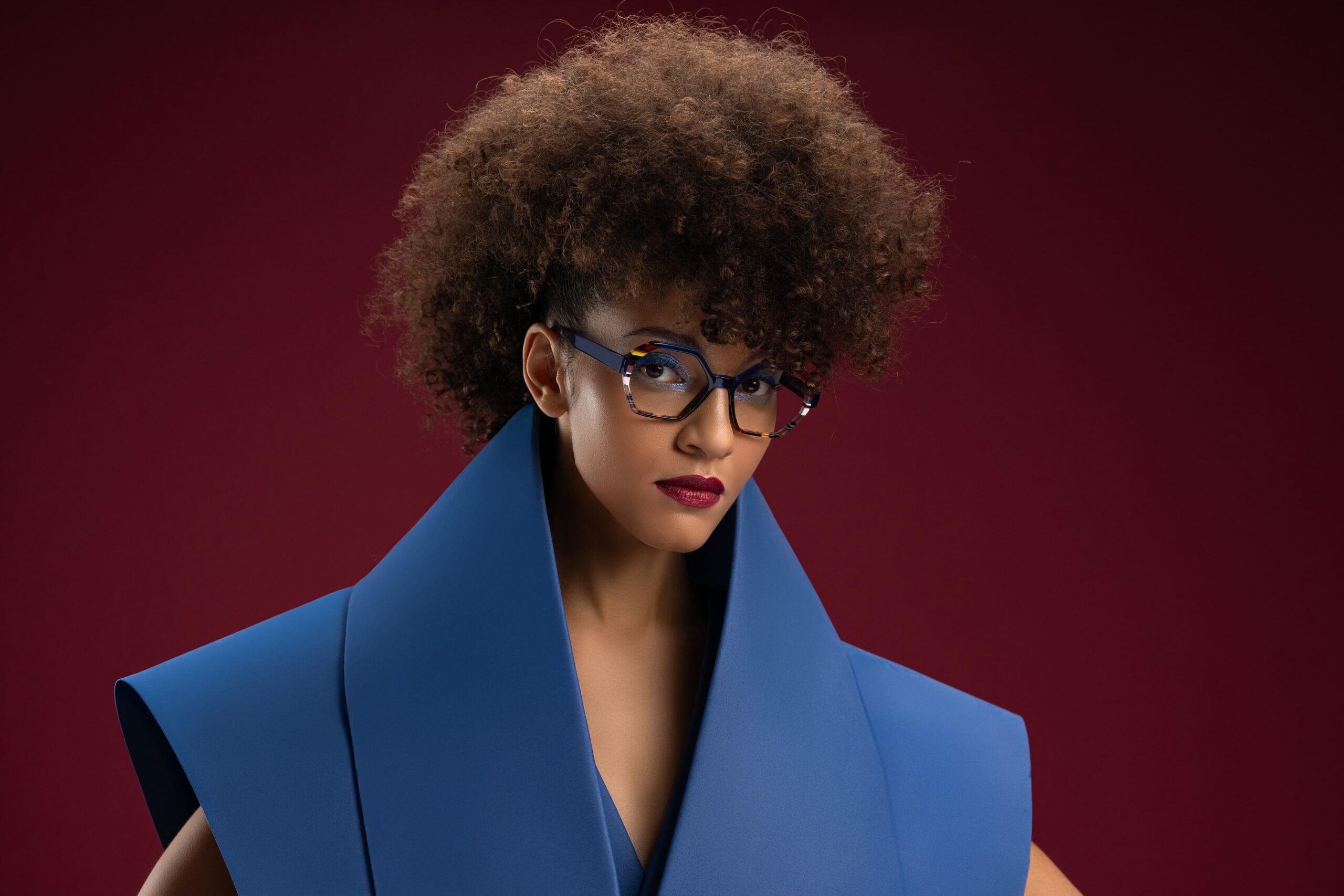
When you look at a pair of Ultra Limited sunglasses, the first thing you notice is the colour. But if you look closely and in the right light, you realise that the colour isn’t uniform. It has layers, directions, boundaries and a precise structure.
That structure is called a laminate, and it is one of the distinctive hallmarks of every Ultra Limited frame.




The art of craftsmanship
What ‘laminating acetate’ really means
In high-end acetate eyewear, lamination is the technique used to bond multiple sheets of different colours together before processing. It is neither painting nor printing: it is the material itself that is bonded, layer by layer, according to a precise and unique pattern.
The result is a colour pattern that exists in no other pair of glasses in the world. It varies depending on the position of the sheets, their orientation, and the exact point at which they are joined. Every choice produces a different visual effect; every Ultra Limited frame bears a signature of craftsmanship that cannot be replicated elsewhere and makes it unique.
Here are all the laminating techniques featured in our collection:
Full-surface bonding
The acetate sheets are bonded across the entire front surface. When you wear a frame with full-surface bonding, the colour pattern completely envelops you; it is visible across every part of the glasses, without interruption. It is the technique that gives colour the most scope to express itself. You’ll find this feature in the Chiavari collection, amongst others.
Side-by-side laying
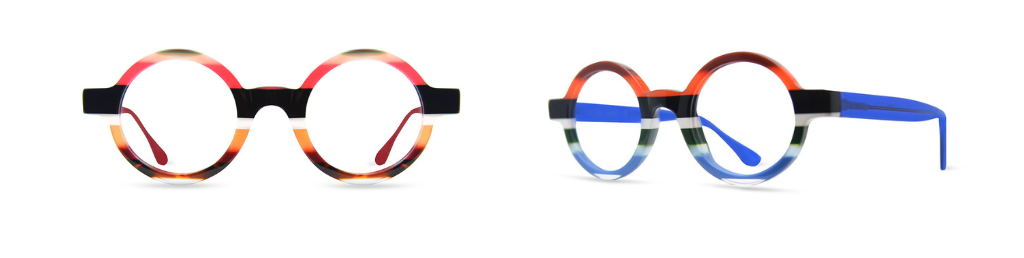
The tiles are laid side by side, creating a sharp or slightly blurred transition between two distinct colour zones. The effect is clean and modern, often striking in the contrast between the two shades. The Marsala model is a perfect example of this.
Lash line application
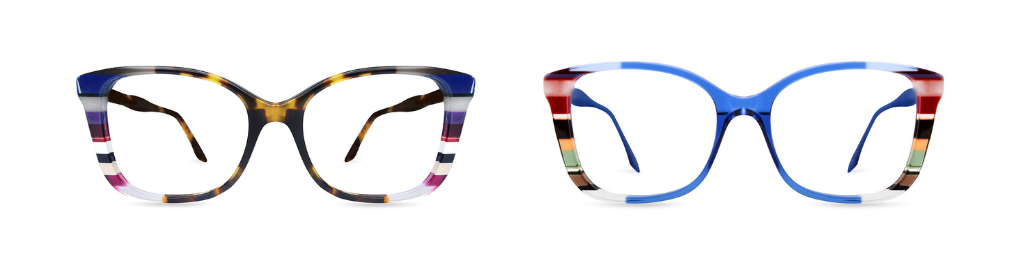
The colour is concentrated at the top of the lash line, closest to the eyebrows. When worn, it creates a colour effect that frames your eyes without obscuring them. A subtle and elegant technique that works in harmony with your face. Available at Rapallo and Giudecca.
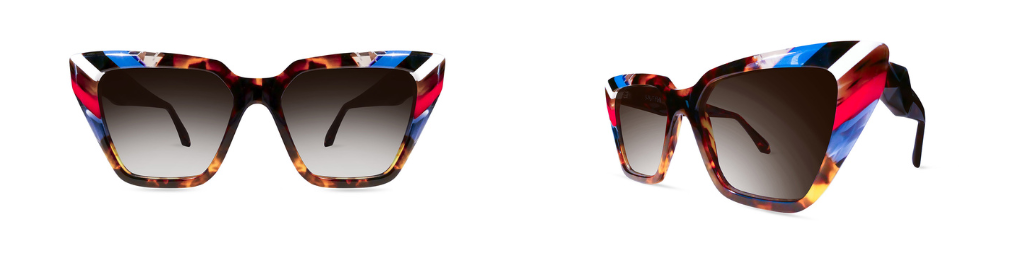
Asymmetrical assembly
The lenses do not follow a symmetrical pattern: the colour proportions are deliberately different between the two halves of the frame. The result is dynamic, almost as if in motion. This is the right choice if you’re looking for a pair of glasses that aren’t immediately obvious. The Ivrea model is the perfect example.
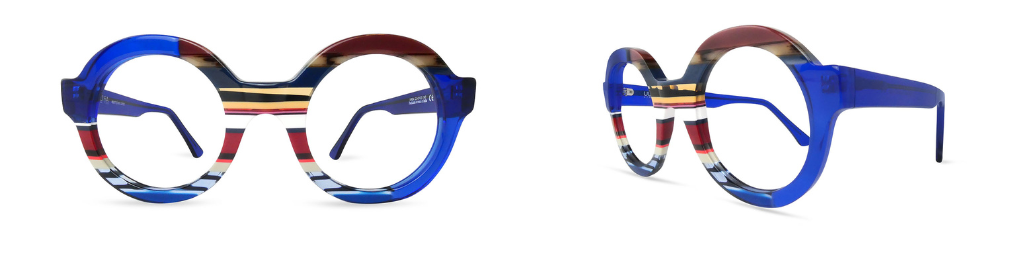
Side-by-side laying with an inserted slab
This is a more complex variation of side-by-side laying: a third slab, often thin and of a different colour, is inserted between the main slabs. The result is a dividing line or a precise colour accent, which requires precision work down to the millimetre. Available in Pozzuoli.
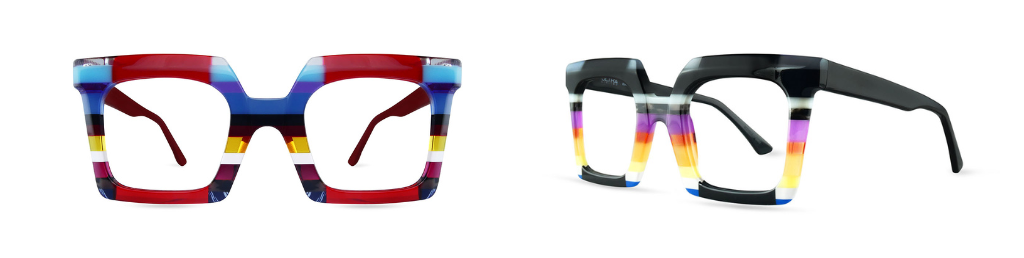
Top-mounted colour
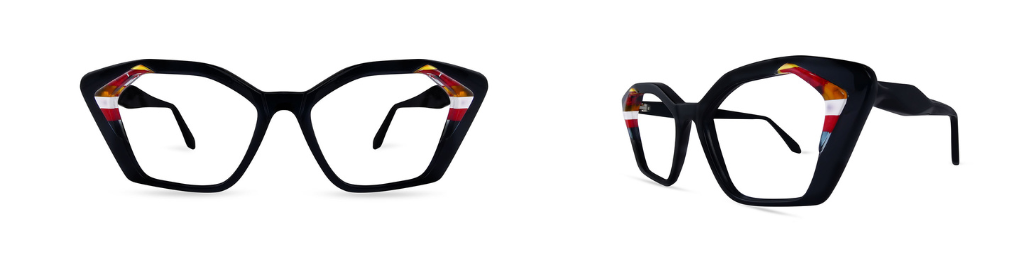
The colour is positioned at the top of the frame, the most visible part when looking at the glasses from the front. It creates a horizontal colour band that gives the glasses a distinctive character without making them look bulky. The Corvara model demonstrates this clearly.
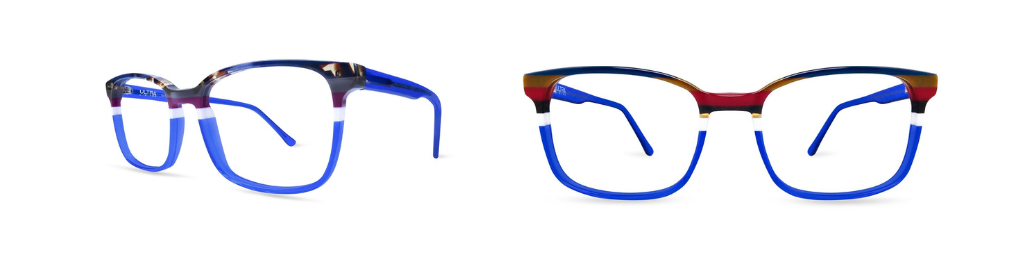
Bottom-up colour scheme
Mirroring the previous style: the colour is concentrated at the bottom of the front. An unusual effect that highlights the part of the frame that is normally overlooked and creates an original visual effect. You can find it in Fiuggi.
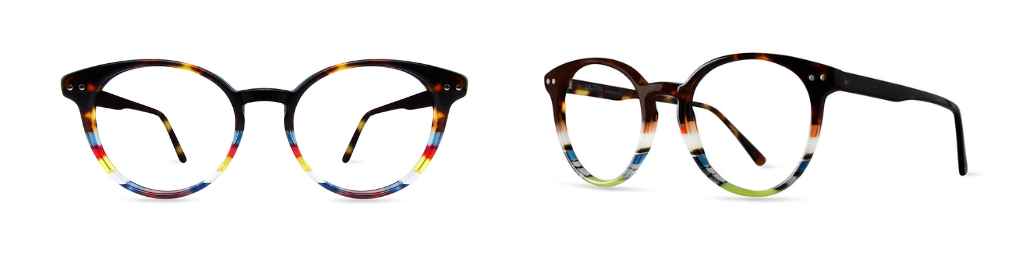
Diagonal laying
The slabs are laid diagonally, creating rows or areas of colour that run across the frame at an angle. The effect is dynamic and contemporary. You’ll find this technique in Biella, often combined with full-surface laying to create even more complex patterns.
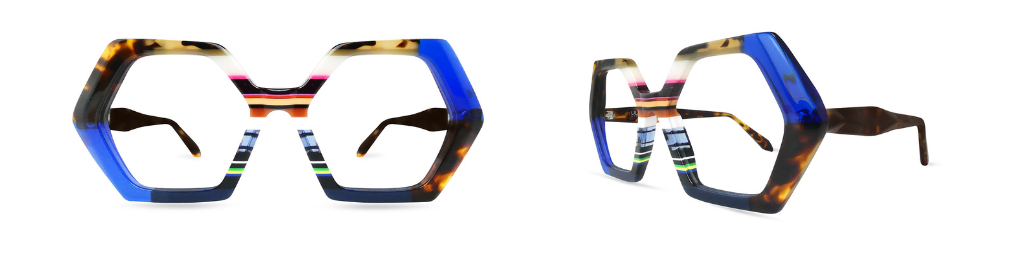
Internal glazing
The coloured lenses are fitted inside the frame structure, whilst on the outside, the glasses feature a single, dominant colour. You’ll find this feature in the new Carloforte model.
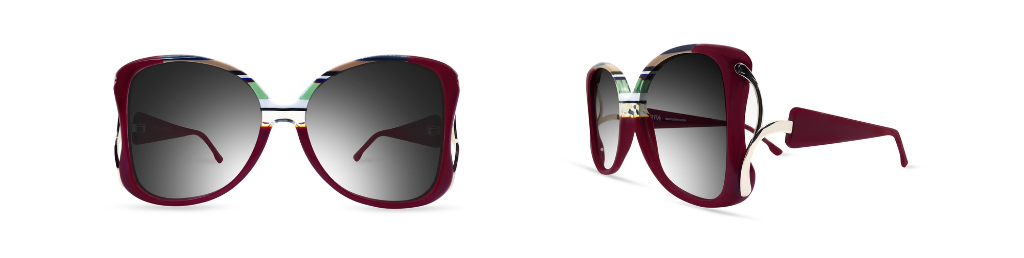
Frame edging
A strip of a different colour runs around the entire frame, like a border. When worn, this creates a sense of depth that enhances the shape of the glasses and provides a striking colour contrast between the inside and outside. The Ostuni model is the perfect example of this.
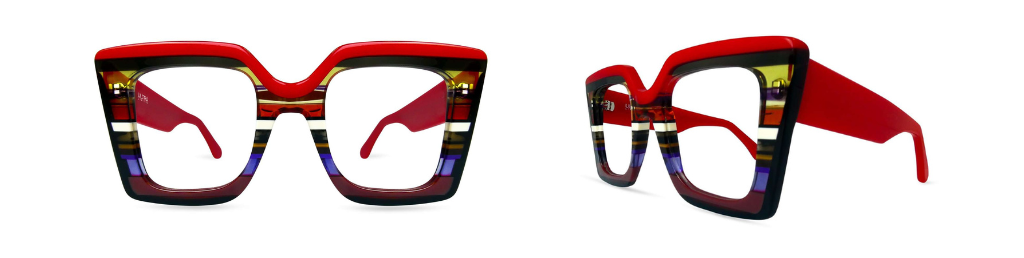
Bonding with an overhanging panel
It starts with a seamless finish, enhanced by the addition of a panel that physically protrudes from the surface, adding depth to what is already visible. This is genuine design, not just an effect. You’ll find it in the Piana and Altamura models.
Find your favourite
Every lamination is a stylistic choice
Behind every piece of marquetry lies a process of precision and craftsmanship: artisans who select the veneers, match the colours, and check every combination before work begins.
No automated process can replicate this precision, and that is precisely why every Ultra Limited frame is unique: because each piece is crafted by hand, one at a time.